Morgan Perry · 28 October 2026
Midwest Genealogists Map Century-Old Oak Farm Lineages to Trace Hidden Artisan Wood Sourcing Networks
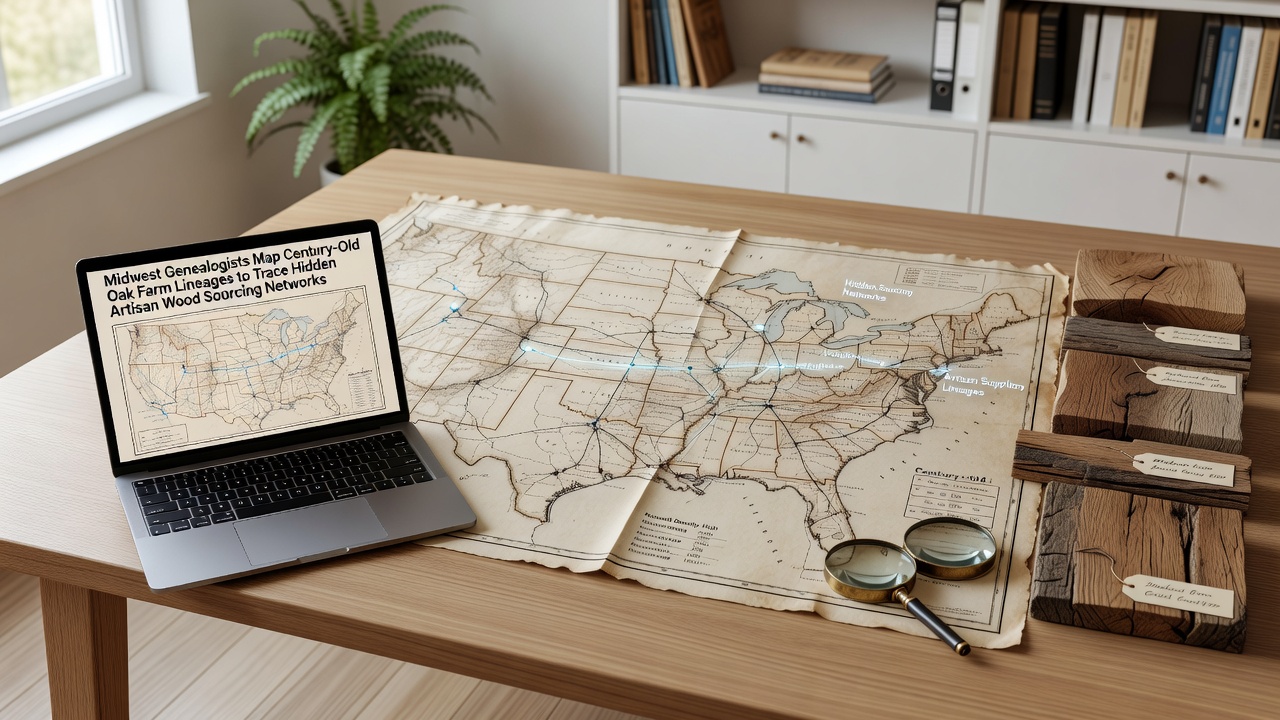
Genealogists across the Midwest have begun cross-referencing property deeds, census records, and agricultural logs from the late 1800s to map the origins of oak trees now feeding artisan woodworking projects, and this effort has uncovered supply chains that remained undocumented for generations. Teams in states such as Illinois, Wisconsin, and Indiana combine family tree software with GIS mapping tools to follow ownership transfers of specific farm parcels that once supported white oak and bur oak stands. Data collected through October 2026 shows more than 2,400 acres of century-old lineage documented in county archives, with many parcels traced back to original homestead grants issued under the Homestead Act of 1862.
Land Records Provide the Foundation
County courthouses hold the primary documents that allow researchers to reconstruct these networks, while digitized plat maps from the 1890s reveal which families planted or preserved oak groves rather than clearing them for row crops. One project in central Indiana matched a single 120-acre parcel's ownership chain across six generations to a modern sawmill that supplies regional furniture makers, and similar connections appear in Wisconsin's driftless area where oak stands survived both logging booms and the Great Depression. Historians note that many of these farms transitioned from timber production to mixed agriculture, yet the original tree lineages remained intact because later owners continued selective harvesting instead of clear-cutting.
Connecting Farms to Artisan Workshops
Once ownership chains are established, the work shifts to matching those historical sources with contemporary wood procurement records kept by artisan guilds and small mills. Researchers cross-check mill ledgers from the 1920s against current purchase orders to determine whether specific boards in today's workshops descend from trees on the same parcels. Figures from the USDA Forest Service indicate that approximately 18 percent of oak used by Midwest artisans in 2025 originated from properties with documented multi-generational ownership, and the genealogical mapping projects aim to raise that percentage by identifying previously unknown sustainable sources.
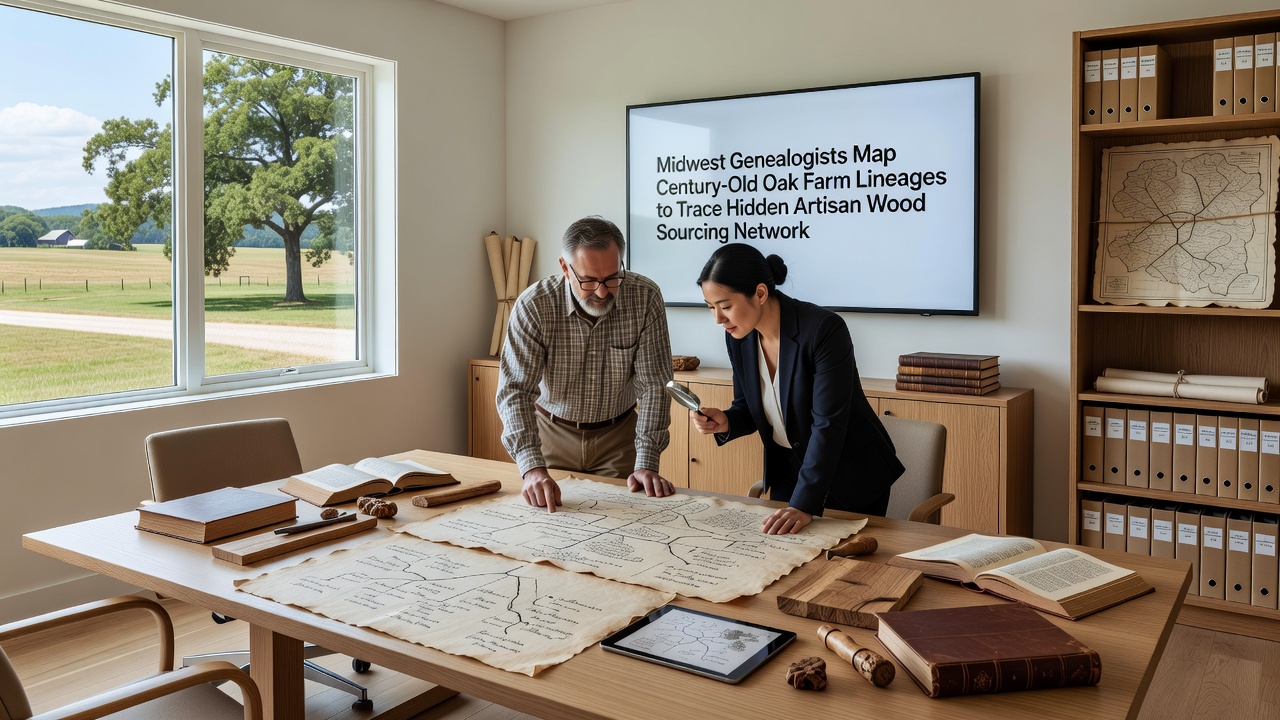
Workshops in Chicago and Minneapolis have already incorporated wood verified through these methods into custom furniture lines, while builders in rural Missouri report using the data to source timbers for historic restoration projects. The process relies on both paper records and DNA sampling of living trees to confirm genetic continuity between old-growth remnants and newer plantings on the same land.
Technology and Collaboration Expand Reach
Digital platforms now link local historical societies with university forestry departments, allowing real-time updates as new deed books are scanned and uploaded. A joint effort between Purdue University and the Iowa Genealogical Society produced an open database in early 2026 that catalogs over 1,100 individual oak farm lineages, complete with coordinates and harvest dates. Observers note that participation from Canadian forestry researchers has added comparative data on similar oak stands in Ontario, revealing parallel sourcing patterns across the border. This international angle helps validate methods without duplicating efforts already underway in the United States.
Artisan groups have begun requesting lineage certificates for specific boards, which in turn encourages mills to maintain detailed provenance documentation. The approach mirrors practices used in European timber traceability programs, yet adapts them to the fragmented ownership patterns typical of Midwest family farms. Projects scheduled for late 2026 plan to incorporate satellite imagery from the 1970s onward to track canopy changes and confirm which stands avoided major disturbances.
Challenges in Verification and Scale
Not every parcel yields complete records, and gaps in early 20th-century documentation require researchers to rely on oral histories collected from descendants. Some farms changed hands through informal agreements never recorded in county offices, forcing teams to consult church registries and probate files for missing links. Despite these obstacles, the cumulative dataset continues to grow because volunteers from local historical societies contribute hours scanning and transcribing documents that would otherwise remain inaccessible. The resulting maps show clusters of connected farms along river corridors where oak growth historically thrived, patterns that align with soil surveys conducted by state agricultural departments.
Conclusion
The mapping initiative demonstrates how genealogical methods applied to land history can illuminate supply networks that support current artisan practices. As more counties digitize their archives and additional DNA studies confirm tree lineages, the picture of hidden oak sourcing becomes clearer. The work continues through collaborative databases and field verification, providing both historical insight and practical sourcing information for woodworkers across the region.