Mara Günther · 14 October 2026
Acoustic Engineers Adopt Oak Wood for Advanced Speaker Enclosure Projects
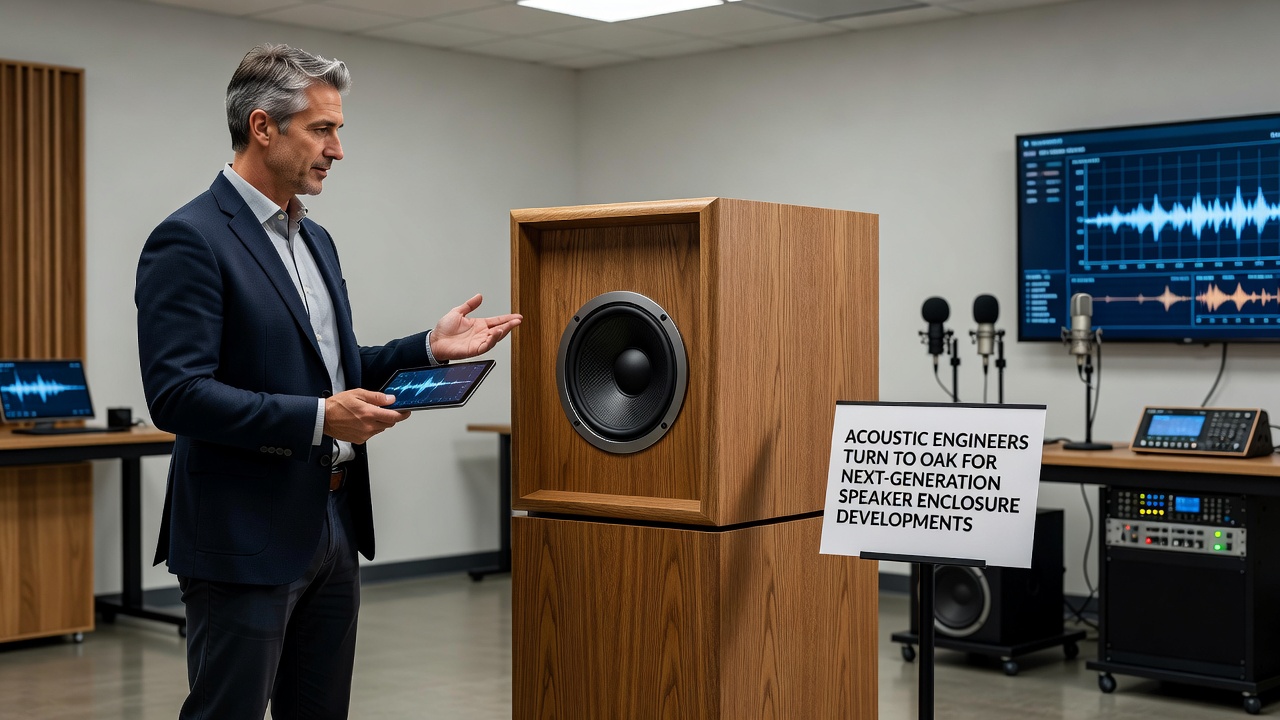
Acoustic engineers continue to evaluate oak as a primary material for speaker enclosures because its density and internal structure influence sound wave behavior in measurable ways, and data from material testing labs indicate that white oak and red oak varieties provide consistent resonance control across frequency ranges. Researchers at institutions focused on audio engineering have documented how oak's grain patterns and moisture content affect vibration damping, which in turn reduces unwanted resonances that can distort audio output in high-fidelity systems.
Material Properties Driving Adoption
Oak exhibits a specific gravity typically ranging between 0.6 and 0.75 when kiln-dried to standard levels, and this characteristic allows enclosures to maintain structural rigidity while absorbing certain mid-range frequencies more effectively than lighter woods such as pine or poplar. Studies conducted through university materials science departments show that oak's cellular composition, which includes a higher proportion of latewood cells compared to many softwoods, contributes to its ability to handle dynamic pressure changes inside speaker cabinets. Engineers note that these traits become particularly relevant in designs for professional monitoring speakers and home theater systems where cabinet resonance must stay below thresholds that interfere with driver performance.
October 2026 reports from industry testing facilities highlight ongoing trials where oak enclosures undergo accelerated aging and humidity cycling to simulate long-term environmental exposure, and results reveal that properly sealed oak maintains dimensional stability with less than 2 percent variance in panel thickness over multi-year periods. This stability supports consistent acoustic performance because enclosure dimensions directly influence internal volume calculations used in crossover network design.
Comparative Analysis With Alternative Materials
Engineers compare oak against medium-density fiberboard, birch plywood, and composite materials in controlled listening tests, and measurements indicate that oak enclosures often produce lower cabinet coloration in the 200 to 800 Hz range when wall thickness and bracing patterns remain identical. While composite panels can achieve similar damping through added fillers, oak provides these properties naturally, which reduces the need for additional internal treatments in some designs. Data collected by European research consortia focused on sustainable building materials further shows that responsibly sourced oak from managed forests maintains competitive pricing relative to imported hardwoods when regional supply chains operate efficiently.
Manufacturing Techniques and Design Integration
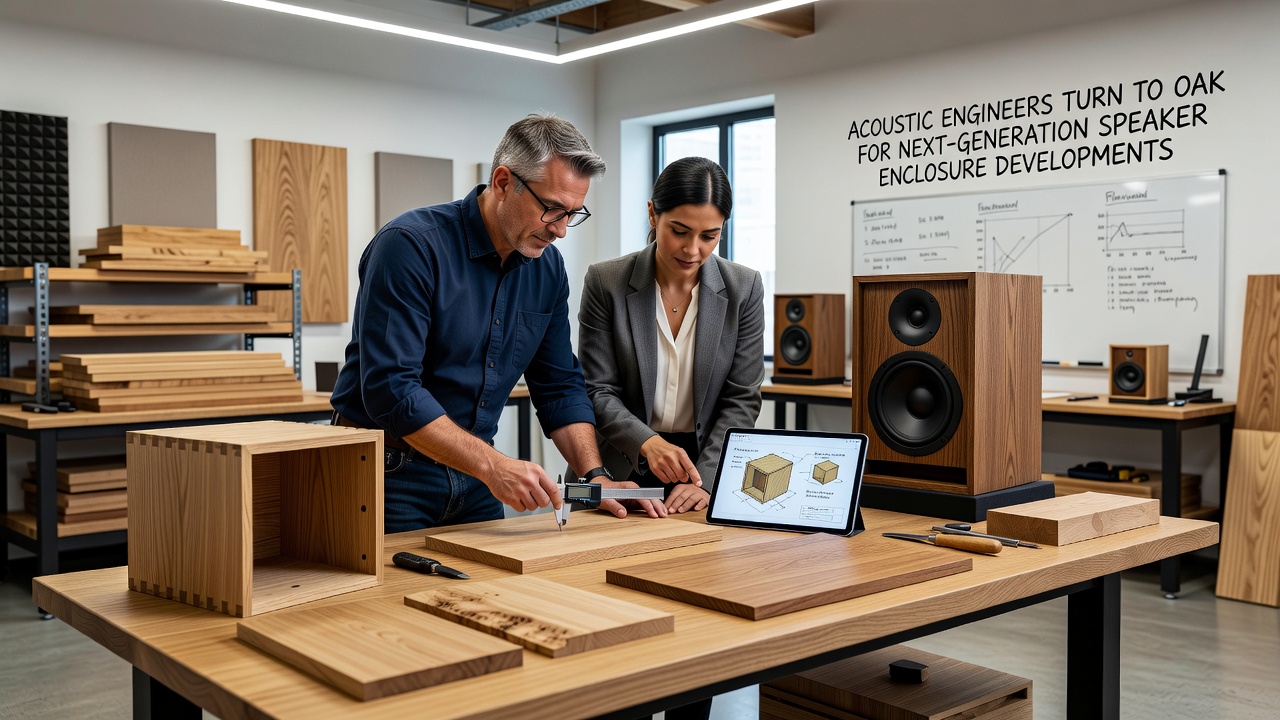
Modern CNC milling processes allow precise joinery on oak panels, and fabricators report that the wood machines cleanly when cutting dovetails or rabbet joints used to increase enclosure rigidity. Acoustic consultants incorporate finite element analysis software to model how oak panels respond to driver movement, and these simulations help optimize wall thickness and brace placement before prototypes reach physical testing stages. In one documented project, a North American audio manufacturer replaced birch plywood with quarter-sawn oak in a line of studio monitors, resulting in measurable reductions in panel flex at high output levels according to accelerometer data collected during sweep testing.
Finishing methods also influence acoustic outcomes because surface treatments can alter how sound reflects within the enclosure, and manufacturers apply thin oil-based sealers or water-based lacquers that penetrate minimally to preserve oak's natural damping characteristics. Supply chain records from forestry agencies in the United States and Canada indicate that certified oak lumber meeting FSC standards remains available in dimensions suitable for enclosure construction, supporting consistent production schedules for audio equipment makers.
Research Developments Through 2026
Academic papers published in acoustics journals during 2025 and 2026 examine oak's performance in ported versus sealed enclosure configurations, and findings suggest that oak's higher mass can shift resonant frequencies downward in certain port designs, which engineers then compensate through adjustments in port length and diameter. Collaborative work between audio laboratories and wood technology centers has produced datasets on oak's sound transmission loss, providing reference values that product development teams now incorporate into specification sheets for new speaker models.
International standards organizations continue to update testing protocols for loudspeaker enclosures, and oak's inclusion in these evaluations stems from its widespread use in both consumer and professional markets. Figures released by materials testing groups in Australia and the European Union show comparable performance metrics when oak samples from different growing regions undergo identical measurement procedures, supporting broader adoption across global manufacturing sites.
Conclusion
Developments in speaker enclosure engineering reflect ongoing integration of oak based on documented acoustic and mechanical properties, with research continuing to quantify performance advantages in controlled environments. Engineers and manufacturers rely on data from standardized testing to refine designs, while supply chain metrics confirm availability of suitable oak stock for production needs. These factors together shape current practices in audio equipment fabrication without reliance on subjective preference.